
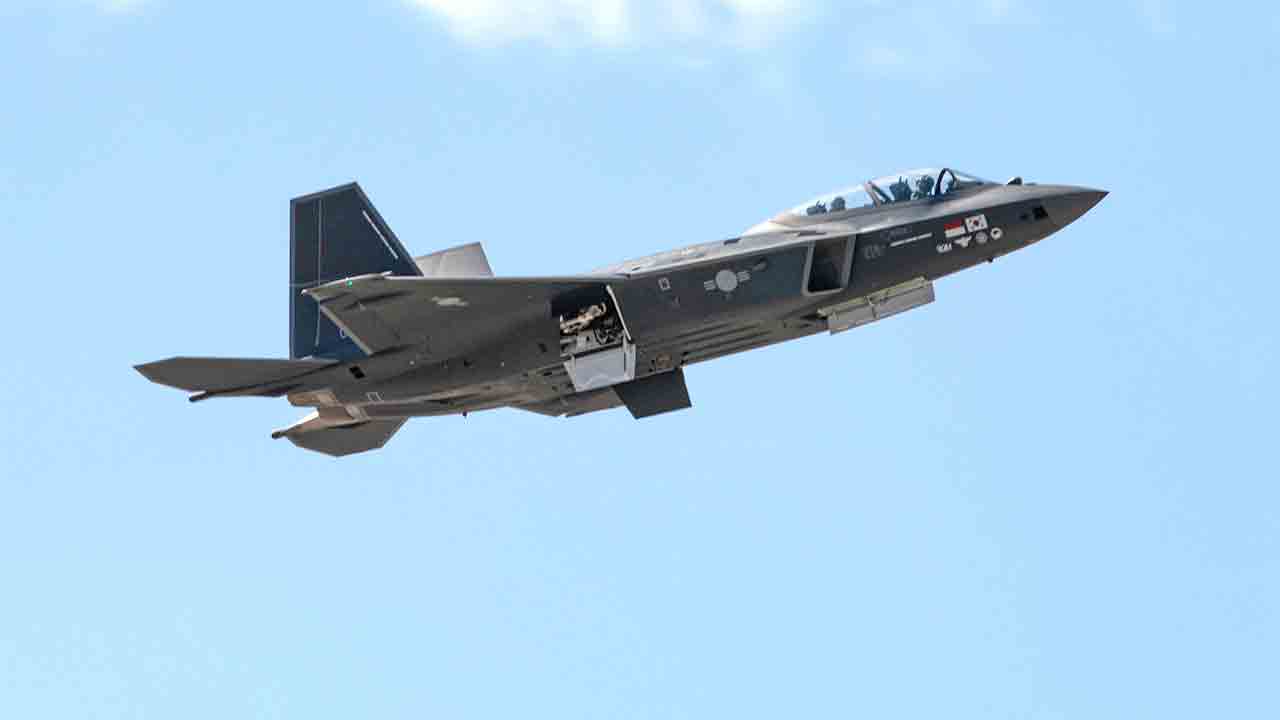
South Korea has made public the unit cost of its indigenous KF-21 Boramae fighter, highlighting cost as a central pillar of the program’s strategy as mass production approaches, scheduled to begin in 2026.
According to figures discussed in South Korea’s Bon Game 2 defense program, Block 1, primarily intended for air superiority and air defense missions, will cost approximately US$ 83 million per aircraft. Block 2, with expanded multirole capabilities—especially for air-to-ground missions—is expected to reach around US$ 112 million per unit.
Mass Production and Market Strategy
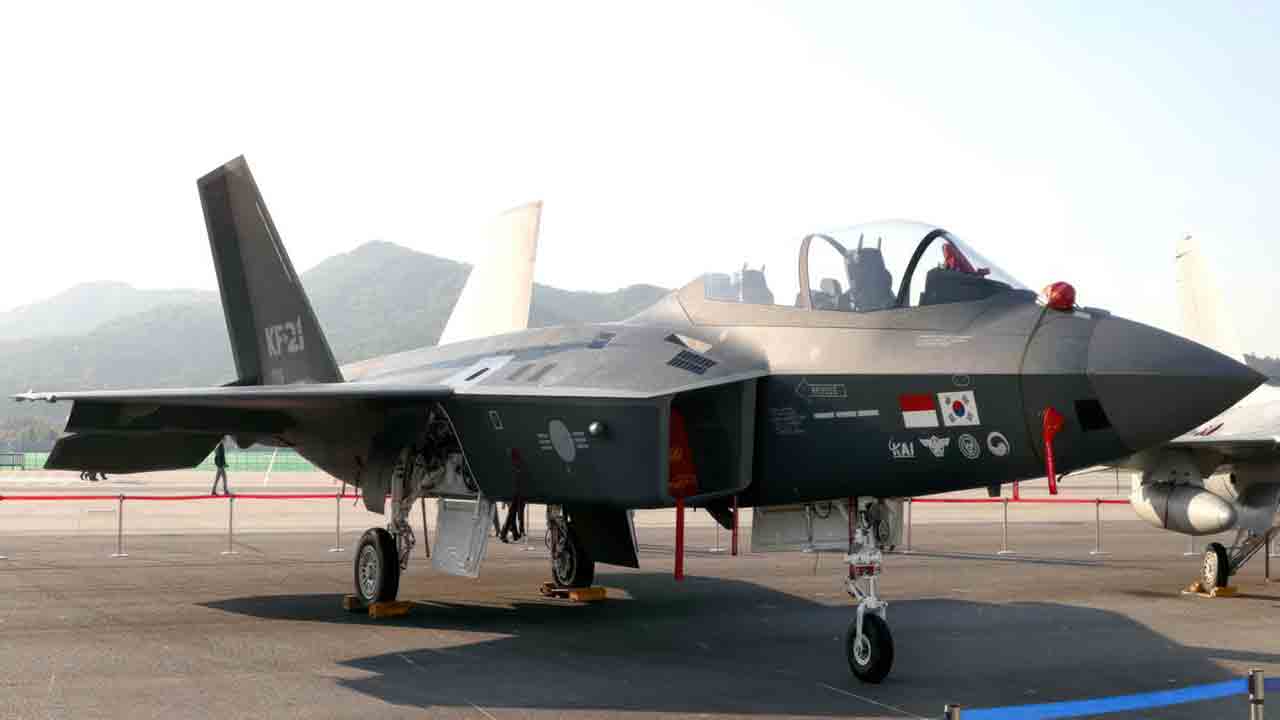
The price disclosure comes at a key stage of the program, which is moving toward serial production after completing flight tests of six prototypes by mid-2026. By presenting clear costs for its initial blocks, Seoul aims to position the KF-21 not only as a viable replacement for aging fighters but also as a competitive option on the international market, especially for countries that consider fifth-generation aircraft costs prohibitive.
Block 1 and Block 2: Differences and Costs
The price difference mainly reflects mission profiles and integrated systems.
Block 1, with an order of 40 aircraft for the Republic of Korea Air Force between 2026 and 2028, focuses on air combat, offering a modern fuselage, low-observable configuration, and a locally developed AESA radar. At US$ 83 million, it is priced below many Western frontline fighters.
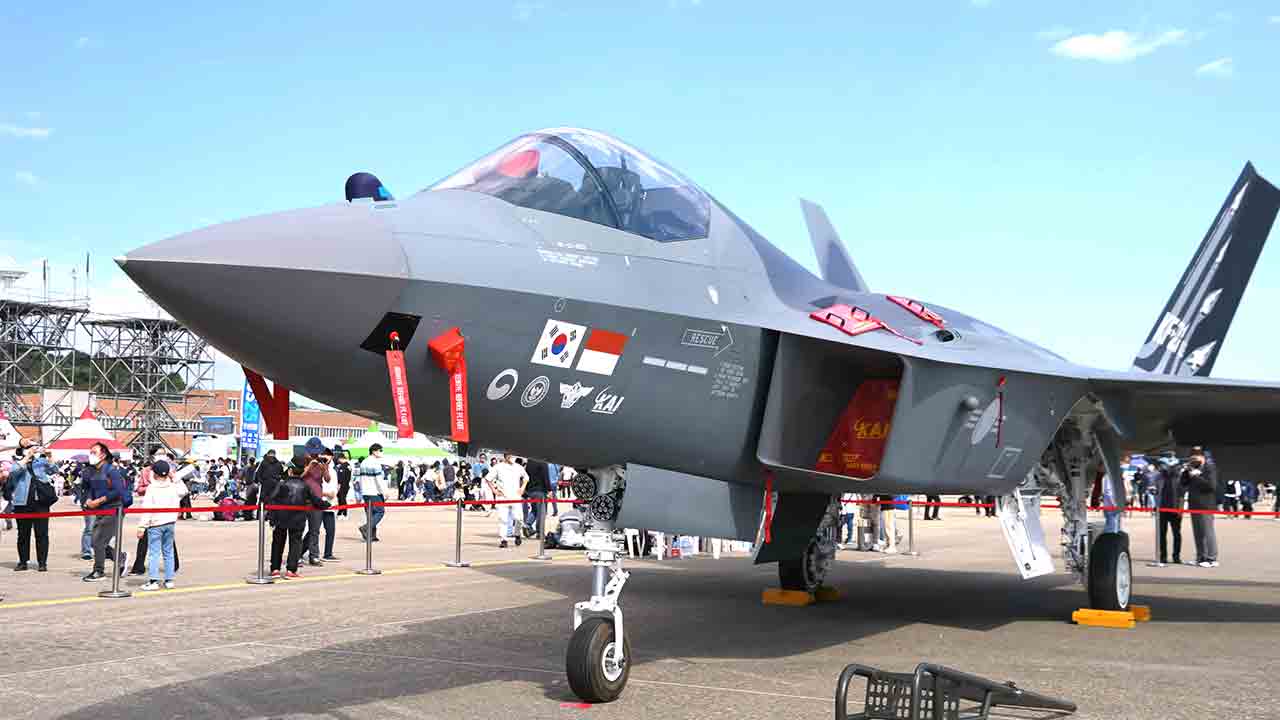
Block 2, planned for approximately 80 aircraft, expands the mission spectrum to full air-to-ground strike capabilities. The higher price—around US$ 112 million (approximately 161.5 billion South Korean won)—is linked to the integration of additional weapons and attack systems, without major structural changes to the airframe. Even so, local analysts note that the cost remains lower than that of several European and North American multirole fighters with similar performance and range.
Direct Comparison with the American F-35
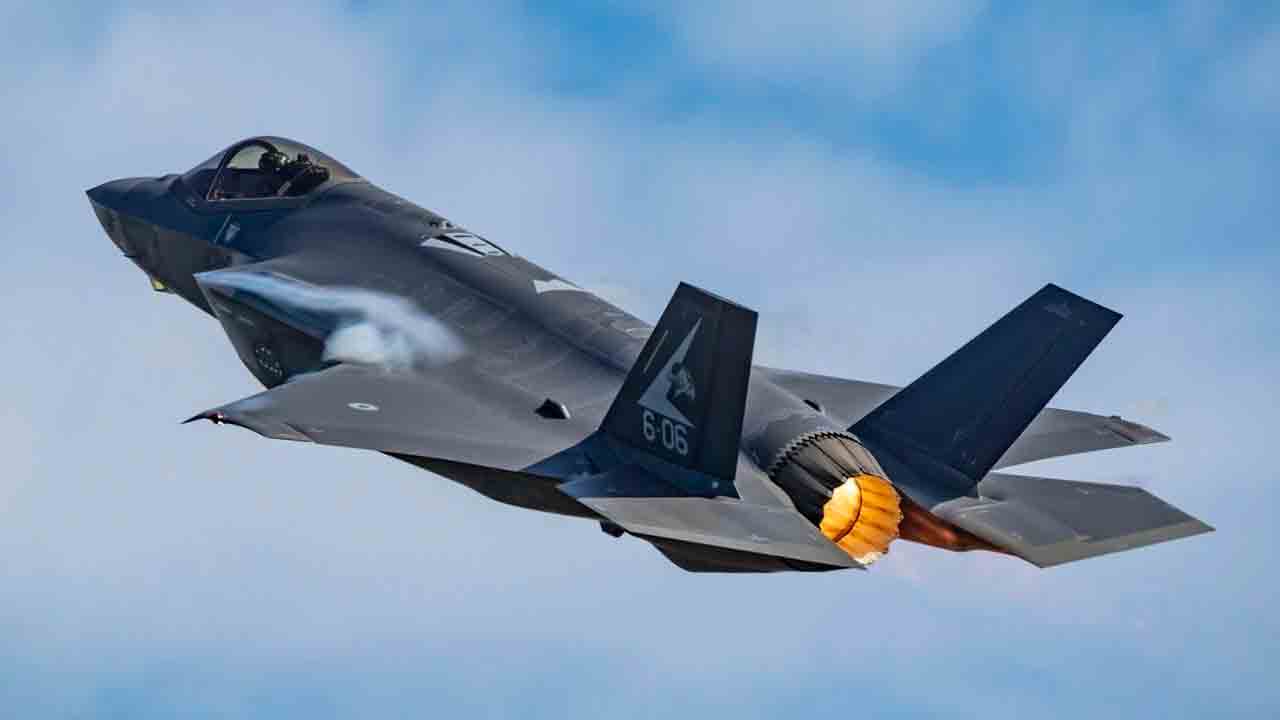
In comparison with the F-35 Lightning II, the price contrast is one of the main arguments in favor of the KF-21. The F-35A—the most common conventional variant—has a unit cost that typically ranges from US$ 80 to 90 million in flyaway cost, depending on the lot and contract, and can exceed US$ 100 million when full acquisition, support, and infrastructure packages are included.
In this context, the KF-21 Block 1, at US$ 83 million, approaches the basic F-35A cost, while Block 2, at US$ 112 million, still tends to be competitive against the total acquisition cost of the American fighter. The difference becomes more relevant when operational costs, political restrictions, interoperability requirements, and export limitations associated with the F-35 are taken into account.
Supply Chain and Exports
The Boramae’s cost advantage is reinforced by a largely domestic supply chain and planned production scale, which tends to reduce unit price volatility in early batches. South Korean authorities describe the KF-21 as a “complementary” fighter to fifth-generation models, rather than a direct replacement—a narrative strengthened by the disclosure of these prices.
With prices of US$ 83 million for Block 1 and US$ 112 million for Block 2, the KF-21 enters the market as a rare case of a newly developed supersonic fighter with transparent and relatively moderate pricing. As serial production approaches and export campaigns progress, cost—more than absolute performance—is likely to become the defining feature of the Boramae.
Source: South Korea National Defense Public Relations Agency (KFN). This content was created with the help of AI and reviewed by the editorial team.
